Definition: The Gas Material Balance equation (GMBE) is based on the principle of conservation of mass. For a volumetric gas reservoir (no water drive), the relationship between reservoir pressure and cumulative production is linear when expressed as vs. .
The p/z Equation
For a volumetric reservoir, the relationship is defined as:
Where:
- = current average reservoir pressure (psia)
- = gas deviation factor at pressure
- = initial reservoir pressure and gas deviation factor
- = cumulative gas production (Bscf)
- = Original Gas-In-Place (OGIP) (Bscf)
Numerical Example:
Given:
- Current
- Current
Example 1C#
1
2
3
4
5
6
7
8
OutputFrom the book
Current Reservoir Pressure (p) = 3094.51 psia
Material Balance with Water Drive
If an active aquifer is present, water influx () maintains reservoir pressure, causing the plot to deviate from a straight line.
General Equation:
Numerical Example (Solving for OGIP with Water Influx):
Example 2C#
1
2
3
4
5
6
7
8
OutputFrom the book
Calculated OGIP (G) = 78.85 Bscf
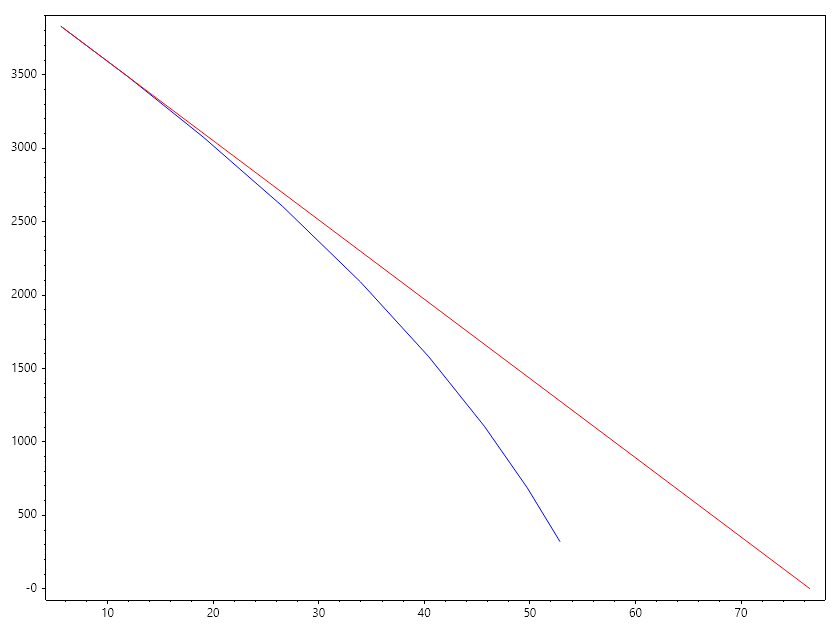
Drive Mechanisms and p/z Signatures
The shape of the curve is a diagnostic tool for identifying reservoir behavior:
| Curve Shape | Drive Mechanism | Interpretation |
|---|---|---|
| Straight Line | Volumetric | No water influx; depletion drive only. |
| Concave Up | Water Drive | Aquifer is providing pressure support. |
| Concave Down | Geopressured | Rock/water expansion significant at high . |
Advanced Problem
Given the following data
Example 3C#
1
2
3
4
- 1. Use Sutton correlation to compute, PseudoCritical Temperature and Pressure
- 2. Implement a function to compute Z factor based on Hall and Yaborough or Dranchuk Abou Kassem
- 3. Compute p/z
- 4. Determine of it is linear.
- 5. Classify the drive mechanism
Example 4C#
1
2
3
4
5
6
7
8
9
10
11
12
13
14
15
16
17
18
19
20
21
22
23
24
25
26
27
28
29
30
31
32
33
34
35
36
37
38
39
40
41
42
43
44
45
46
47
48
49
50
OutputFrom the book
Exercise
Given the production history of Gas Reservoir below
Example 5C#
1
2
3
4
5
6
7
8
9
10
11
12
13
14
15
OutputFrom the book
Initial P/z = 4269.359990640227
GIIP = 85.38985191375379
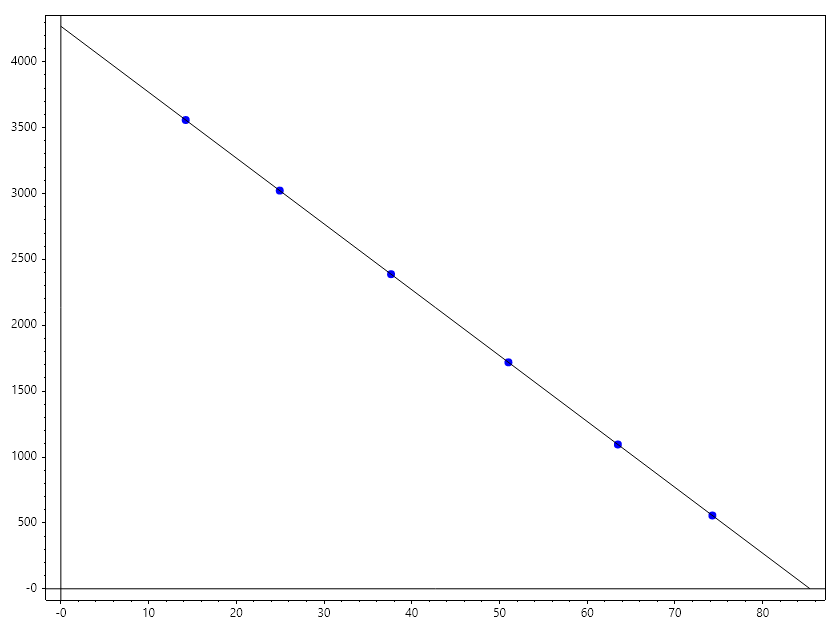
- Determine the type of the reservoir
- Estimate the Initial Gas In-place
Takes a free account.